
How to Choose the Right High-Voltage Tester?
Leave a message
If you're struggling with the selection process, it indicates a high demand for accuracy and safety in your testing, which is crucial. The key to choosing the right high-voltage tester lies in matching the test object, clarifying the test objective, and meeting on-site conditions. Here are some systematic selection suggestions:
First, clarify the test object and application scenario (determine the instrument type) Different equipment has specific requirements for test parameters and methods. The instrument category should be determined primarily based on the object being tested:
Power Transformers
Requires: Turns ratio tester, DC resistance tester, dielectric loss tester
Reason: To verify the turns ratio, winding connection quality, and insulation aging.
High-Voltage Circuit Breakers, GIS Switchgear
Requires: High-voltage switch mechanical characteristic tester
Key parameters: Opening and closing time, speed, synchronicity, bounce count
Recommended configuration: ≥12 channels of synchronous sampling, supporting BeiDou time synchronization for multi-device collaborative testing.
Insulation equipment such as cables, motors, and capacitors
Requires: Insulation resistance tester (digital megohmmeter)
Selection criteria: Must have absorption ratio (DAR) and polarization index (PI) functions to determine the degree of moisture absorption and aging.
High-voltage components such as surge arresters and capacitive bushings
Requires: DC high-voltage generator + leakage current measurement function
Application: To perform DC withstand voltage tests and monitor the leakage characteristics of nonlinear components.
Long-distance cables and large generators
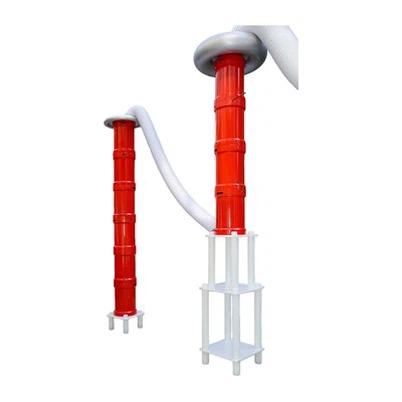
Requires: Series resonant withstand voltage test device
Advantages: Utilizes resonance to reduce power supply capacity requirements; suitable for AC withstand voltage testing of large capacitive loads.