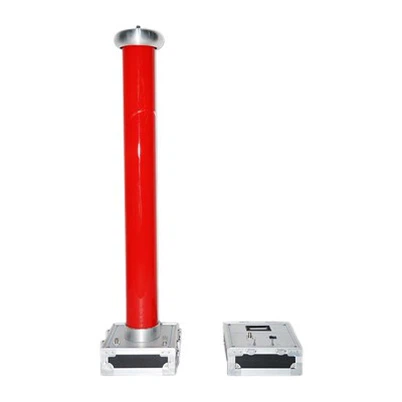

What are the types of high-voltage testers?
Leave a message
High-voltage testers can be classified into several types based on their testing purpose, output voltage form, and application scenario. Each type has its specific technical principles and applicable scope.
Classification by Testing Function: Specialized Testing for Different Electrical Performance Characteristics
These instruments focus on testing a specific characteristic of high-voltage equipment and are commonly used in power system maintenance and factory inspection:
Withstand Voltage Tester: Used for AC or DC withstand voltage tests to verify whether insulation materials break down under high voltage. Widely used for insulation strength testing of electrical products, cables, motors, etc.
Partial Discharge Tester: Detects minute discharge phenomena inside equipment and is commonly used for condition assessment of high-voltage equipment such as GIS and transformers.
Dielectric Loss Tester: Measures the energy loss of insulation materials under an electric field, reflecting the degree of insulation aging.
DC Resistance Tester: Used to measure the resistance value of winding conductors to determine the quality of connections.
Transformer Turns Ratio Tester: Verifies whether the transformer turns ratio meets design requirements, ensuring accurate voltage transformation.
Classification by Voltage Output Form: AC, DC, and Pulse
AC High Voltage Tester: Outputs power frequency (50Hz) AC high voltage, simulating actual operating conditions, suitable for insulation testing of most electrical equipment.
DC High Voltage Tester: Outputs stable DC high voltage, used to test leakage current in capacitive equipment (such as long cables and surge arresters), avoiding capacitive current interference.
Pulse High Voltage Tester: Generates transient high voltage pulses, simulating lightning strikes or operational overvoltages, used for testing the anti-interference capability of electronic equipment.