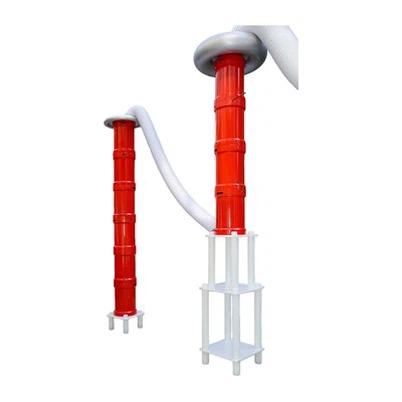

High Voltage Withstand Voltage Tester Usage Instructions
Leave a message
A high voltage withstand voltage tester is a key piece of equipment in electrical safety testing, widely used in electrical manufacturing, quality inspection, and maintenance to verify whether the insulation performance of products meets standards. Correct operation not only ensures testing accuracy but also guarantees personnel safety. The following is a detailed usage guide based on the general procedures for mainstream equipment:.
Pre-use Preparation: Safety and Equipment Inspection
Environment and Protection Requirements
The test area should be open, with no unauthorized personnel or metal objects within 1 meter.
Lay an insulating mat with a thickness of ≥5mm on the ground and affix a "High Voltage Test, Do Not Approach" warning sign.
Operators must wear insulating gloves with a withstand voltage of ≥10kV and insulating shoes with a withstand voltage of ≥6kV. Long hair should be tied up, and metal jewelry is prohibited.
Power Supply and Grounding Check
Confirm that the power supply voltage matches the equipment nameplate (e.g., 220V/380V).
The power socket must be reliably grounded, with a grounding resistance ≤4Ω.
After connecting the power supply, observe whether the power indicator light illuminates normally. Double illumination of the K light indicates that the live wire, neutral wire, and ground wire are connected correctly.
Instrument Self-Test
Turn on the power switch and confirm that the display screen shows no garbled characters or error messages;
Turn the "Voltage Adjustment" knob counterclockwise to the 0 position;
Short-circuit the high-voltage output terminal and the ground terminal to start the test and observe whether the leakage current display is 0, confirming that there is no internal leakage.
Test Lead Inspection
The high-voltage wire (red) and grounding wire (black) should be free from damage and aging, and the plugs should have good contact;
If any cracks are found in the insulation layer, they must be replaced to prevent high-voltage leakage.