
How To Choose A Suitable Transformer Oil Tester?
Leave a message
Choosing a transformer oil tester hinges on standard compatibility, parameter adaptation, and the suitability for on-site operating conditions. Here are some specific suggestions:
Define the Testing Items and Choose the Right Instrument Type
Transformer oil testing involves multiple indicators, and different instruments have significantly different functions. The choice must be based on actual testing requirements:
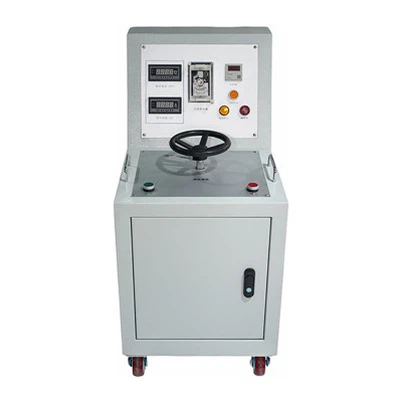
Withstand Voltage Test: Used to determine the insulation strength of the oil. A commonly used instrument is the "Dielectric Strength Insulating Oil Tester." These instruments are designed according to DL/T 429.9 or GB/T 507 standards. Voltage is applied until the oil sample breaks down, and the breakdown voltage value is recorded. The withstand voltage of new oil is generally not lower than 35kV, while the requirements for oil in operation vary depending on the voltage level.
Dielectric Loss (tgδ) Test: Reflects the degree of oil aging and contamination. An "Dielectric Loss Insulating Oil Tester" is used. It measures the dielectric loss tangent and capacitance, and is highly sensitive for early detection of oil deterioration.
Acid Value Test: Assesses the content of acidic substances in the oil and is suitable for determining the degree of oxidation. The ST-1504 fully automatic acid value analyzer can automatically complete titration according to GB/T 264 and GB/T 7599 standards.
Chromatographic analysis: Used to detect dissolved gases (such as acetylene, hydrogen, etc.) in oil, determining whether there is partial discharge or overheating fault inside the transformer. The GC-2010-KT transformer oil chromatograph can complete the full analysis of 7 gases with a single injection, and the minimum detection limit for acetylene is 0.1 ppm.